

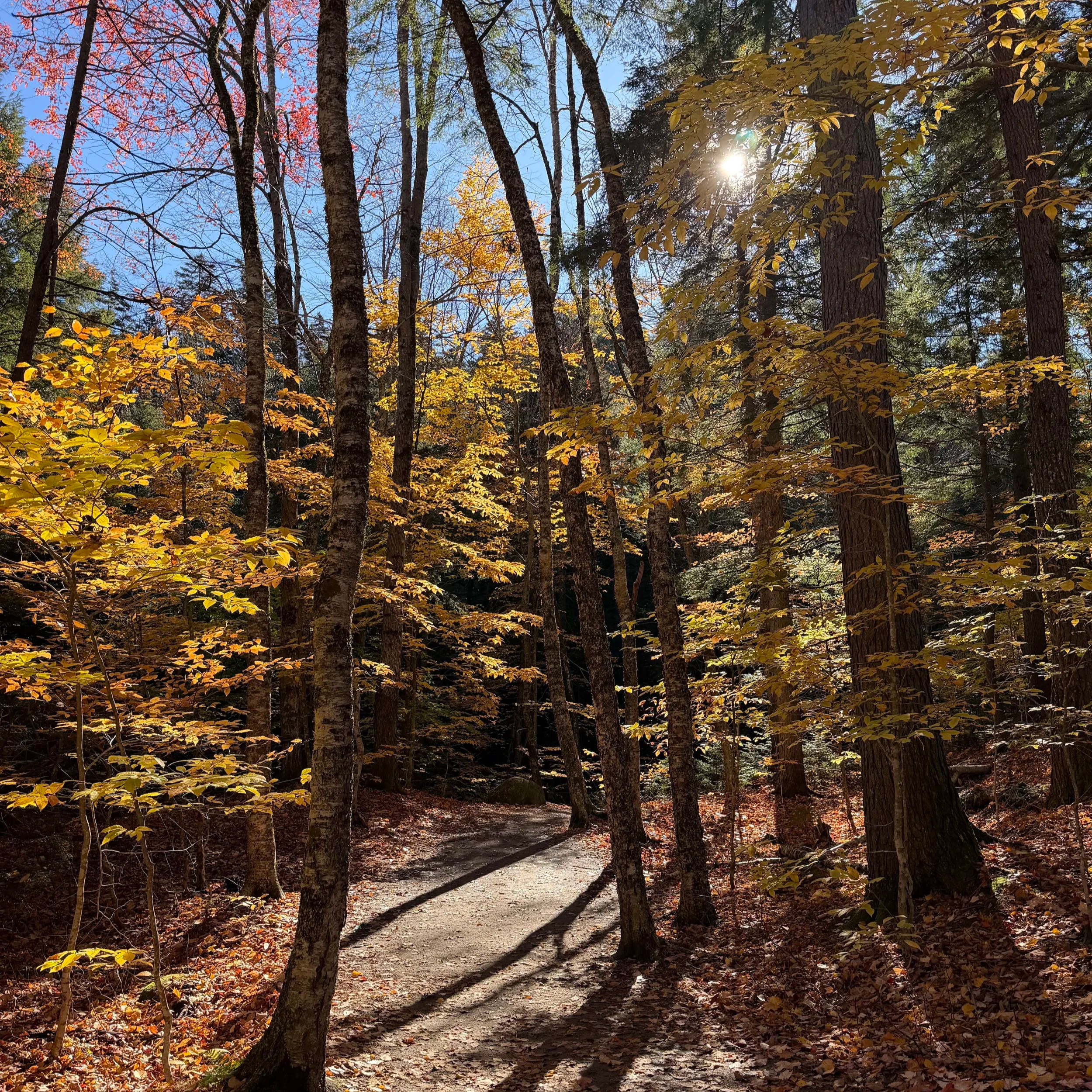
Imagine stepping away from your phone, leaving your to-do list behind, and walking beneath a canopy of trees. You notice the warmth of the sunlight, hear birds singing, and feel a gentle breeze against your skin. Gradually, the mental noise of everyday life begins to soften.
This experience may feel simple, but it reflects something researchers find worth investigating: how spending time in nature can support psychological well-being, emotional balance, and aspects of cognitive functioning. From reducing perceived stress to helping restore attention, exposure to natural environments has been associated with measurable benefits for mental health.
Let's explore why.
1. Nature helps calm the body's stress response
Stress is a normal biological response to challenges. When we encounter pressure, the body activates systems that prepare us to respond, including the sympathetic nervous system and the hypothalamic-pituitary-adrenal (HPA) axis. These systems influence heart rate, alertness, and the release of stress hormones such as cortisol.
Although this response can be useful in the short term, prolonged stress can leave us feeling mentally exhausted, irritable, and overwhelmed.
Time in natural environments may help the body shift toward a calmer physiological state.
A systematic review of research on nature exposure and stress found that studies measuring physiological outcomes reported associations between time in nature and reductions in several stress-related indicators such as heart rate, cortisol, and other markers of autonomic nervous system activity.
Why might this happen?
Reduced sensory overload: Natural settings may offer a break from traffic, artificial lighting, crowded spaces, and constant digital notifications.
Gentle sensory engagement: The sound of water, movement of leaves, and changing patterns of sunlight can provide interesting but relatively undemanding stimulation.
A change of pace: Walking slowly, sitting beneath a tree, or watching clouds move can create space between a stressful situation and our response to it.
These experiences may help us feel less physiologically and psychologically activated.
The takeaway is simple: when life feels overwhelming, a quiet walk through a park or a few peaceful minutes in a garden may provide an accessible opportunity to decompress.
2. Nature supports emotional well-being and a more positive mood
Our surroundings can influence how we feel. Busy urban environments may expose us to noise, crowds, and competing demands, while natural environments often provide opportunities for calm, curiosity, and enjoyment.
Research suggests that these differences matter.
A 2022 systematic review and meta-analysis examined 24 experimental studies comparing physical activity in natural outdoor environments with activity in urban outdoor settings. The researchers found results favoring natural environments for several outcomes, including anxiety, fatigue, positive affect, and feelings of energy or vitality.
In practical terms, spending time outdoors may help us experience:
Less tension and anxious feelings.
Greater feelings of calm and vitality.
More positive emotions, such as contentment and enjoyment.
Greater engagement with the present moment.
Nature may also create opportunities to experience awe — the feeling of encountering something vast, beautiful, or greater than ourselves. A mountain range, a dramatic sunset, or the immense canopy of an old forest can briefly shift our attention away from everyday concerns.
Although awe is an active area of psychological research, not every outdoor experience produces it, and its effects depend on the individual and the situation.
An important distinction: feeling better after spending time outside does not mean difficult emotions disappear or that nature alone can treat a mental health condition. Rather, nature can be one supportive part of a broader approach to emotional well-being.
3. Nature may help restore attention and mental energy
Have you ever struggled to concentrate after hours of emails, meetings, studying, or scrolling? You reread the same paragraph, lose track of your thoughts, or find even simple decisions unusually difficult.
This experience is often described as mental fatigue. One explanation for why nature may help is known as Attention Restoration Theory (ART).
Developed by environmental psychologists Rachel and Stephen Kaplan, the theory proposes that sustained concentration requires effort. Natural environments may help us recover from this effort by gently engaging our attention without demanding the same level of deliberate focus.
Think about watching leaves move in the wind or observing ripples across a pond. These experiences can hold your attention without requiring you to solve a problem, respond to a message, or make a decision.
A 2025 meta-analysis in the Journal of Environmental Psychology examined 80 studies and found more cognitive benefits from nature exposure compared with non-natural environments. The most reliable benefits appeared in working memory and attentional control The largest differences in cognitive restoration appeared around 30 minutes of exposure, but this is not a universal threshold or a guaranteed outcome. A break in a restorative setting may make it easier to return to demanding work feeling less mentally drained.
4. Nature creates opportunities for mindfulness and emotional regulation
Mindfulness involves paying attention to the present moment with openness and without judging what we experience. Nature offers countless opportunities to practice this!
You might notice the texture of tree bark, listen to birds in the distance, feel the ground beneath your feet, or observe the changing colors of the sky. These sensory experiences invite attention away from repetitive thoughts and toward what is happening right now.
This does not mean that nature automatically stops rumination — the repetitive cycle of dwelling on distressing thoughts. However, a change in surroundings and attention may give us some distance from those thoughts.
There are several ways this can support emotional well-being:
Greater awareness of emotions. Quiet time outdoors can create an opportunity to notice feelings before reacting to them.
A pause between thought and response. Walking without rushing may provide space to reflect on a difficult situation rather than immediately responding to it.
A broader perspective. Observing the scale and complexity of the natural world may help some people see their immediate worries within a larger context.
Sensory grounding. Paying attention to sounds, colors, textures, and bodily sensations can offer a concrete way to reconnect with the present when the mind feels scattered.
For a simple practice, try walking for five to ten minutes without headphones. Notice three things you can see, two things you can hear, and one physical sensation, such as the breeze on your face. There is no need to force yourself to feel relaxed. Simply pay attention.
5. Nature can support psychological well-being and resilience
Psychological resilience is the capacity to adapt to challenges, recover from difficult experiences, and continue functioning when life becomes demanding.
Resilience is influenced by many factors, including social support, sleep, physical health, coping skills, and access to appropriate mental health care. Nature may be one additional resource.
A systematic review and meta-analysis of 50 studies on nature-based outdoor activities found that interventions such as gardening, outdoor exercise, and nature-based therapy were associated with improvements in several mental health outcomes including depressed mood, anxiety, and positive affect.
These findings suggest that outdoor activities can offer more than a temporary pleasant experience. When incorporated into a regular routine, they may help create repeated opportunities for restoration, enjoyment, and engagement.
For example, gardening can provide a sense of purpose as you care for living things. Hiking can offer achievable challenges and opportunities to develop confidence. Sitting outdoors can give you a quiet space to reflect after a difficult day.
Nature may also encourage a healthier relationship with everyday fluctuations. Plants grow gradually, seasons change, and weather shifts without following our preferred schedules. Some people find these rhythms a useful reminder that change is a normal part of life.
6. You do not need a wilderness adventure to benefit
One of the most encouraging findings in nature research is that beneficial experiences do not necessarily require remote forests, expensive vacations, or strenuous outdoor adventures.
Nature can include neighborhood parks, tree-lined streets, gardens, greenways, lakesides, and other accessible outdoor spaces.
A 2025 study in Nature Cities, reviewing 449 peer-reviewed studies and conducting a meta-analysis of 78 field-based experiments, found that exposure to urban nature benefited a range of mental health outcomes. Parks and urban forests were among the settings associated with reductions in negative mood and improvements in psychological well-being. This is important because access to nature differs substantially between communities. A small patch of green space near home may be more realistic than a trip to the mountains — and it can still provide an opportunity to pause and reconnect with your surroundings.
Here are a few ways to make nature part of ordinary life:
Take a short walk outdoors during a lunch break.
Eat a meal on a patio, balcony, or park bench.
Tend to houseplants, herbs, or a small garden.
Choose a green route for part of your commute when practical.
Spend time near trees or water while leaving your phone in your pocket.
Invite a friend or family member to take a regular walk with you.
You do not need to enjoy hiking, running, or camping. The most useful activity is one that feels safe, accessible, and enjoyable enough to repeat.
Conclusion: Make room for the natural world
In a world filled with notifications, deadlines, constant stimulation, and competing demands, spending time outdoors offers an opportunity to experience a different pace.
The research suggests that nature can support emotional well-being, improve mood, provide relief from some forms of stress, and help restore aspects of attention. It can also create opportunities for mindfulness, movement, meaningful relationships, and enjoyment.
You do not need to travel far or transform your lifestyle to begin experiencing these possibilities. You can start by stepping outside, noticing the trees along your street, sitting in a garden, or taking a short walk beneath an open sky.
The goal is not to use nature as another task to optimize or another obligation to fulfill. It is to make space for experiences that allow your mind and body to pause.
Sometimes, caring for your well-being begins with something remarkably simple: stepping outside and giving yourself time to notice the world around you.
References and further reading
Psychological benefits of outdoor physical activity in natural versus urban environments: A systematic review and meta-analysis of experimental studies (2022). Read the study on PubMed .
The relationship between nature exposures and attention restoration, as moderated by exposure duration: A systematic review and meta-analysis (2025). Read the study .
The effect of the natural environment on cognition, mood and stress in adults: A systematic review (2025). Read the study .
Nature-based outdoor activities for mental and physical health: Systematic review and meta-analysis (2021). Read the full article .
Effect of nature exposure on perceived and physiologic stress: A systematic review (2020). Read the study on PubMed .
Acute mental health benefits of urban nature (2025). Read the study in Nature Cities .
Are you ready to improve your well-being? Reach out to Dr. Leila Forbes!